

When it comes to understanding the Fort McMurray real estate market, there’s no shortage of opinions. You’ll hear plenty of advice from coworkers, friends, and family about what homes are “really” worth or when the best time to buy or sell might be. The truth is, while everyone means well, most of that advice is based on outdated or incomplete information.
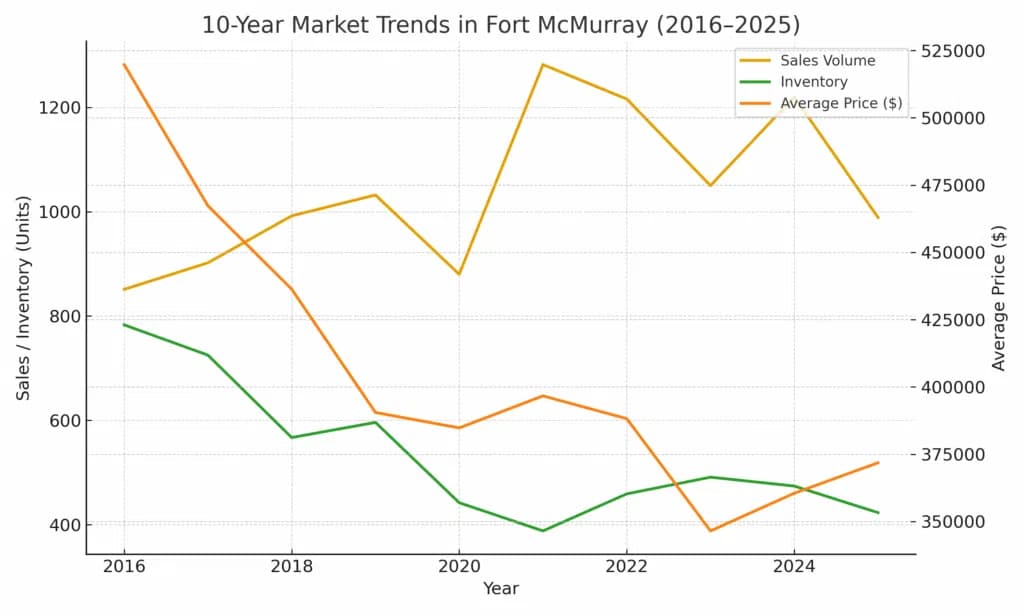
Real estate data, when read correctly, tells a much clearer story. It shows what’s actually happening in the market right now, not what people think is happening. The numbers reveal the trends, and in Fall 2025, those trends tell a story Fort McMurray hasn’t seen in nearly a decade: rising sales, higher prices, and the lowest inventory in years.
Why Real Estate Data Matters
For both buyers and sellers, data helps separate noise from fact. Understanding the metrics behind the market allows you to make confident decisions, avoid costly mistakes, and time your move strategically.
Since 2016, I’ve helped hundreds of clients navigate the Fort McMurray market through some of its most unpredictable years, from recovery to rebuilds, and now into a phase of renewed growth. What hasn’t changed is how valuable clear, honest interpretation of the numbers can be.
The Metrics That Matter Most
The Fort McMurray market generates a lot of numbers every month. Here’s how to read the most important ones and what they mean for you.
Sales Volume
Sales volume measures how many homes sold in a given period. Rising sales indicate confidence. Buyers are active, and sellers are listing homes that meet current demand.
In Fall 2025, sales are up five percent compared to last year. That’s a meaningful increase after years of slower activity and a strong indicator of renewed confidence across all property types.
Inventory
Inventory refers to how many homes are currently for sale. When inventory is high, buyers have options and sellers face more competition. When it’s low, well-priced homes sell quickly.
Inventory in Fort McMurray has dropped by 10.8 percent compared to last year, the lowest level in nearly a decade. That tightening supply is one of the main reasons prices are climbing again.
Average and Median Price
The average price represents the overall trend, while the median price gives a more realistic picture of what a “typical” home costs. Both have been moving upward through 2025.
The average residential price now sits around $361,500, a four percent increase year over year. This rise reflects balanced growth rather than volatility, which is healthy for long-term stability.
Days on Market
Days on market (DOM) tells you how long homes take to sell. Fewer days mean stronger demand. In 2025, most homes are selling in under 60 days, compared to well over 80 days just a few years ago. This acceleration supports what we’re seeing on the ground. Active buyers, quicker negotiations, and more multiple-offer scenarios.
Absorption Rate (Months of Supply or Months of Inventory)
This measures how long it would take for all current listings to sell if no new ones hit the market.
A balanced market sits between four and six months of supply. Anything below that indicates a seller’s market. As of Fall 2025, Fort McMurray sits at 3.8 months. These are some of the most competitive levels we’ve seen since before 2016.
List-to-Sale Price Ratio
This number tells you what percentage of the asking price homes are actually selling for. It’s one of the most misunderstood stats in real estate, and one that I explain often.
Right now, homes in Fort McMurray are selling for about 96 percent of their list price. In other words, the “super hot deals” people think they can find aren’t the reality. Serious buyers are paying close to asking because inventory is limited and competition is increasing.
What the Fall 2025 Data Is Telling Us
For the first time in nearly ten years, the numbers are aligned in one clear direction.
Sales volume is up.
Inventory is down.
Prices are trending higher.
Homes are selling faster and closer to list price.
This shift isn’t temporary; it’s the result of long-term supply constraints meeting consistent demand. For buyers, that means less room for negotiation and more need for preparation. For sellers, it’s the ideal moment to list strategically and capture strong value before the next inventory cycle adjusts the balance.
“In 2025, homes are selling for an average of 96.2 percent of list price, proof that the market is more competitive than it seems.”
Common Misconceptions About the Market
Every market has myths, and Fort McMurray is no exception.
1. “You can still get a smoking deal.”
In this environment, most sellers are pricing accurately based on current comparables. The idea of finding extreme under-market bargains isn’t realistic right now.
2. “The market is cooling.”
While some months show normal seasonal dips, the overall trend is upward. Year-over-year, both volume and prices continue to rise.
3. “It’s better to wait.”
Waiting often means paying more later. With inventory shrinking, waiting for the “perfect” time can mean missing the window entirely.
How Buyers and Sellers Can Use This Data
For Buyers
Watch the months of supply number. Anything under four months signals a more competitive market. Act quickly when you find a home that fits.
Pay attention to the list-to-sale ratio. If homes are closing at 96 percent of asking, lowball offers will likely be rejected.
Focus on preparation. Pre-approvals, flexible timelines, and strong terms carry more weight than price alone.
For Sellers
Price strategically. Even in a strong market, pricing just above comparable sales can delay offers.
Presentation still matters. Staged, well-photographed homes consistently outperform others.
Use the data to your advantage. Understanding current absorption rates helps time your listing and plan for your next purchase.
Looking Ahead
If these trends continue, Fort McMurray could experience one of its healthiest housing cycles in years. Sustained buyer confidence, paired with a balanced pace of new listings, suggests stability, not volatility.
Of course, markets evolve. Economic factors, employment shifts, and policy changes all play a role. But for now, the data shows optimism backed by results, not speculation.
View full housing statistics from Pillar 9
Final Thoughts
Real estate isn’t about guessing where the market is going. It’s about understanding where it is now. Numbers don’t replace experience, but when interpreted correctly, they give clients clarity and confidence.
As someone who has been helping Fort McMurray residents buy and sell since 2016, my role is to make sense of that data for you, to explain what it means for your specific home, your goals, and your timing.
Let’s make sense of the data together before your next move. If you want to know what these numbers mean for your property or your next purchase, I’m happy to walk you through it. Your next move, elevated. Get started here!
Written by Kate Arnold | REALTOR® with Coldwell Banker United